
























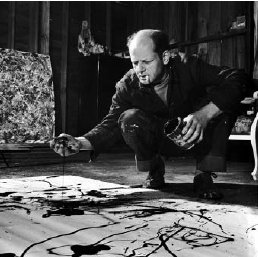
 One of the most famous abstract expressionist artists of all time, US artist Jackson Pollock was famous for his unique style of drip painting.
Born in 1912, Jackson enjoyed considerable fame and notoriety before his death in a car accident in 1956. He was noted to suffer from alcoholism.
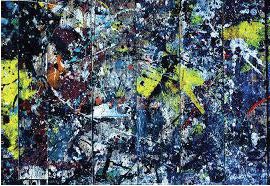 Four months after his death, Pollock was given a memorial retrospective exhibition at the Museum of Modern Art (MoMA) in New York City. A larger, more comprehensive exhibition of his work was held there in 1967. In 1998 and 1999, his work was honoured with large-scale retrospective exhibitions at MoMA and at The Tate in London.
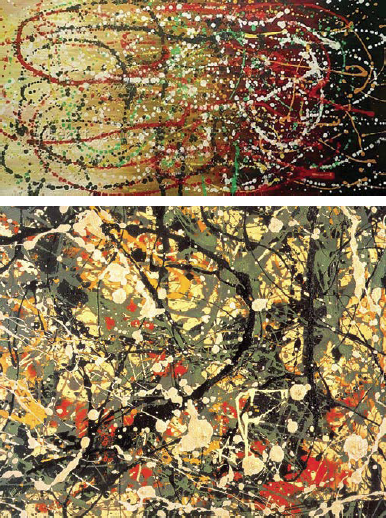
DRIP PERIOD
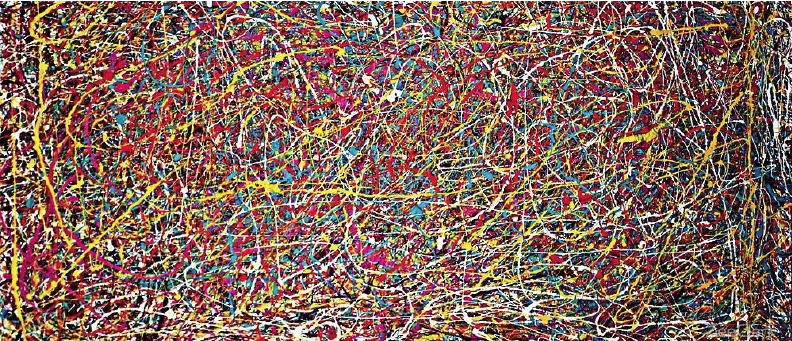
Pollock’s most famous paintings were made during the Drip Period between 1947 and 1950. He rocketed to fame following a 1949 four-page spread in Life magazine that asked, “Is he the greatest living painter in the United States?” At the peak of his fame, Pollock who most say actually invented the drip style abruptly abandoned the technique to move onto monochrome pourings.
BLACK POURINGS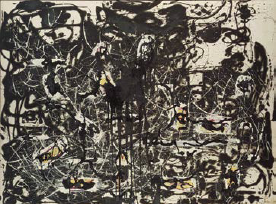
Pollock’s work after 1951 was darker in colour, including a collection painted in black and 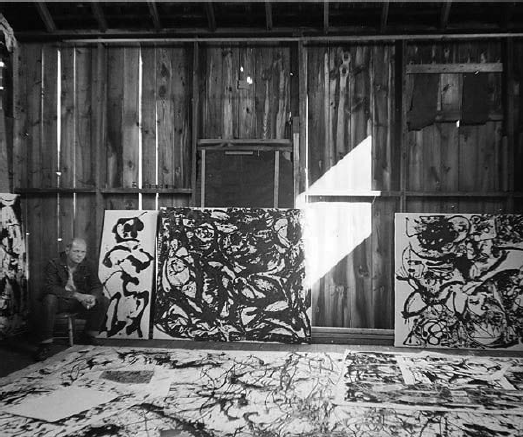 white. These paintings have been referred to as his Black Pourings and when he exhibited them at the Betty Parsons Gallery in New York none of them sold. The departure from his earlier style wasn’t what his collectors wanted. These works show Pollock attempting to find a balance between abstraction and depictions of the figure.
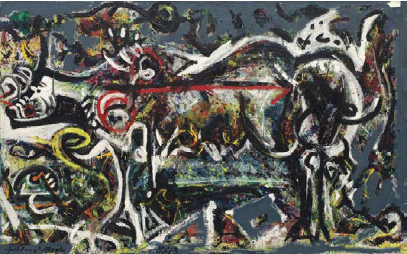
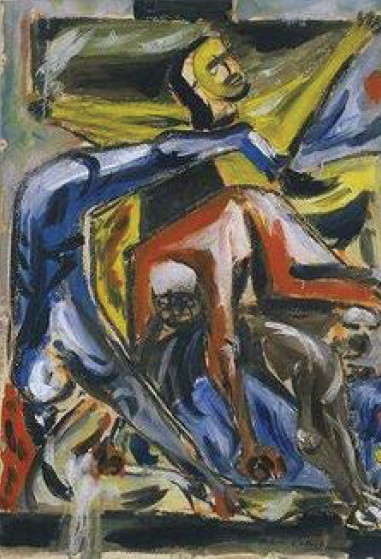
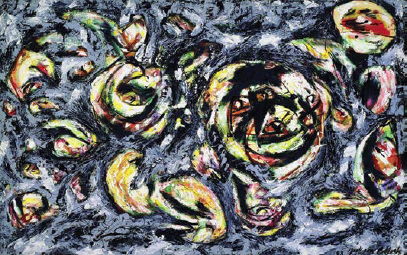
FIGURATIVE PAINTINGS
He later returned to using colour and continued with figurative elements. During this period, Pollock had moved to the Sidney Janis Gallery a more commercial gallery; the demand for his work from collectors was great. An alcoholic from an early age it is believed this pressure and demand for his work deepened his dependency. His untimely death in 1956 was due to a car accident whilst he was under the influence.
His work brought together elements of cubism, surrealism and impressionism – and transcended them all.