




From eco-fashion to desalinated skylights and plastic bricks, we uncover the hottest eco trends that are aiming to change the world one giant carbon footprint at a time.
Desalinated Water Lighting
This is truly amazing. A New Zealand design graduate has created a skylight that harnesses solar power and desalinates water for drinking.
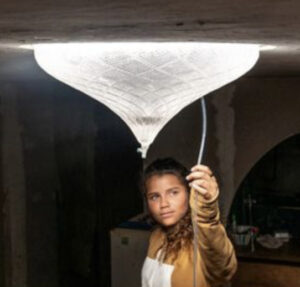
Henry Glogau, is a finalist in the 2021 Lexus Design Awards with his new invention that takes advantage of abundant resources in Chile – water and sunlight – and turns them into working electricity and a clean water supply.
The Masters graduate explains: “I wanted to achieve a design which was sustainable, passive and created a striking feature inside the dark settlement home.
“In my development process it became apparent that I could address the lack of indoor lighting and water access by creating a hybrid skylight and solar desalination device.”
Goglau, who has a master’s degree specialising in architecture for extreme conditions, claims the skylight can purify 440 millilitres of water per day with leftover brine being sifted into batteries made of zinc and copper where they power an LED strip for use during the night.
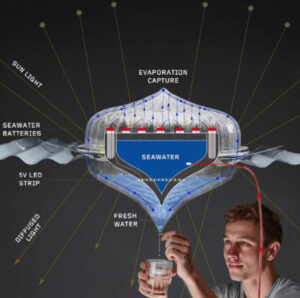
During the day the light is powered by a small solar panel. The whole solar desalination skylight is also cheap to manufacture and with the help of local charities it is already being installed in the Chilean shanty towns of Antofagasta.
Stronger Than Concrete Plastic Bricks
Inventor and entrepreneur Nzambi Matee is founder of a start-up that recycles plastic waste into bricks that are stronger than concrete.
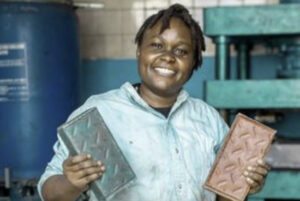
Her company, Gjenge Makers Ltd, has developed a prototype machine that turns discarded plastic into paving stones.
What’s also amazing is just one day in the factory can produce 1500 churned plastic pavers whilst simultaneously eliminating the problem of what to do with unwanted discarded plastic in her hometown of Nairobi.

She combines this plastic with sand to create the bricks thus making them stronger and more durable than concrete bricks. Recent testing has confirmed the plastic bricks hold twice the threshold of their concrete counterparts.
So far, Gjenge Makers has managed to recycle more than 20 tonnes of plastic waste into bricks that come in an array of colours including red, green, blue and brown.
The start-up has also generated 112 job opportunities in the area for garbage collectors, women and youth groups.
Leotards Made of Plastic
Bristol-based, eco fashion brand Burnt Soul Clothing have put recycled materials into the forefront of their catsuit and bodysuit fashion line.
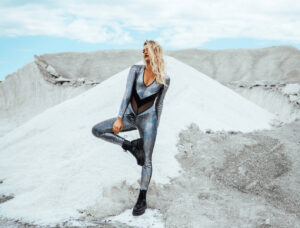
All their garments are made from either regenerated Nylon (Econyl) or Polyester (rPet) yarns. The biggest benefit to using regenerated yarns is that the brand is reusing waste plastics and fishing nets sure for landfill. Or even worse, the sea.
It also uses considerably less energy, natural resources and water compared to virgin polyester and Nylon fabrics and produces less C02 in the production process.
Burnsoul explains the process: “Once the plastic bottles have been sorted, they are minced into plastic flakes, pressed into pellets and then melted and spun into polyester yarn. It’s then mixed with lycra to give it stretch and knitted into fabric.”
According to Econyl for every 10,000 tonnes of raw material, they are able to save the equivalent of 70,000 barrels of crude oil and avoid 65,100 tonnes of C02 emissions.
Their unique and colour designs are available for sale global via their website www.burntsoul.com


